
A field in England
Brown and white rats, blackberries and hidden trains ... for the time being.

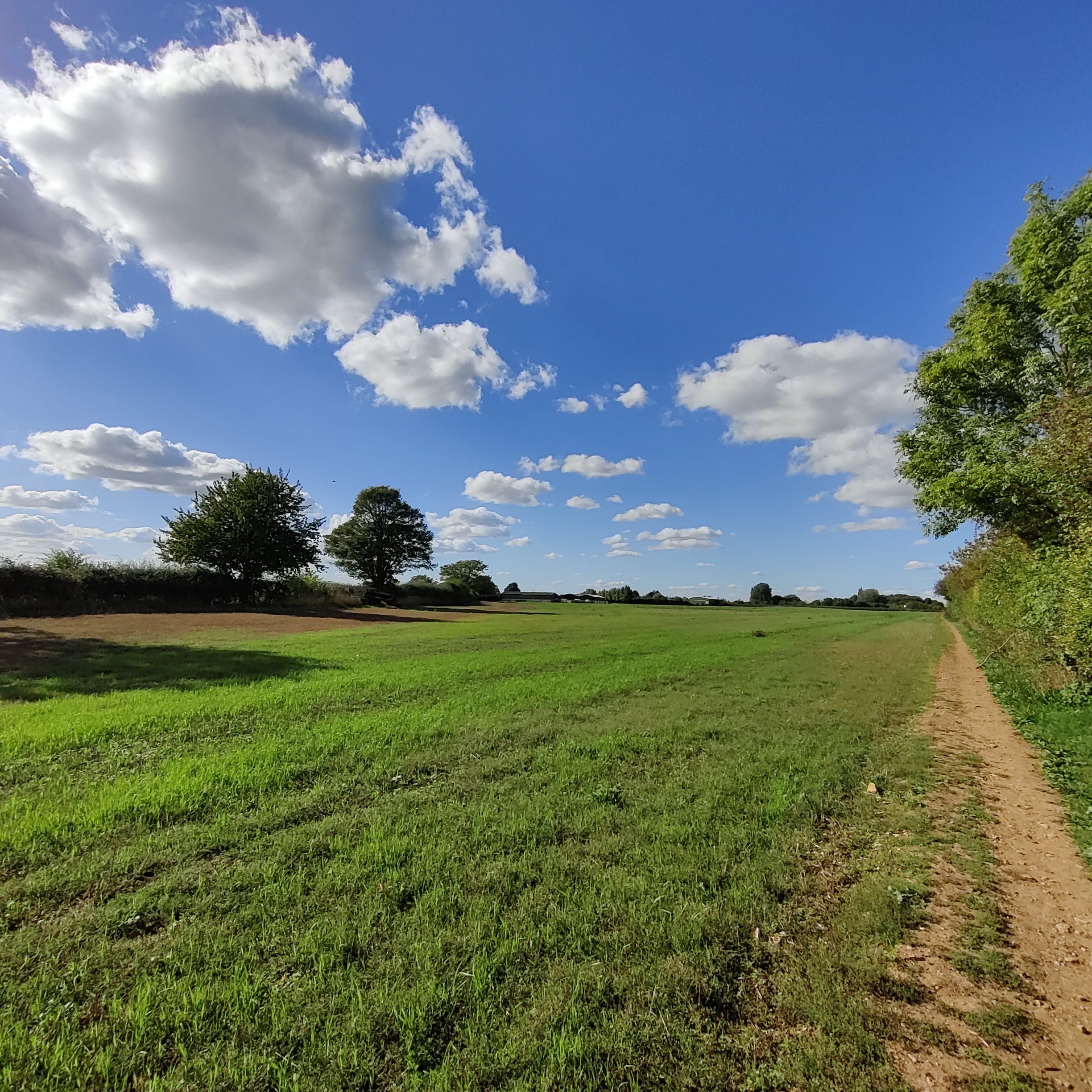
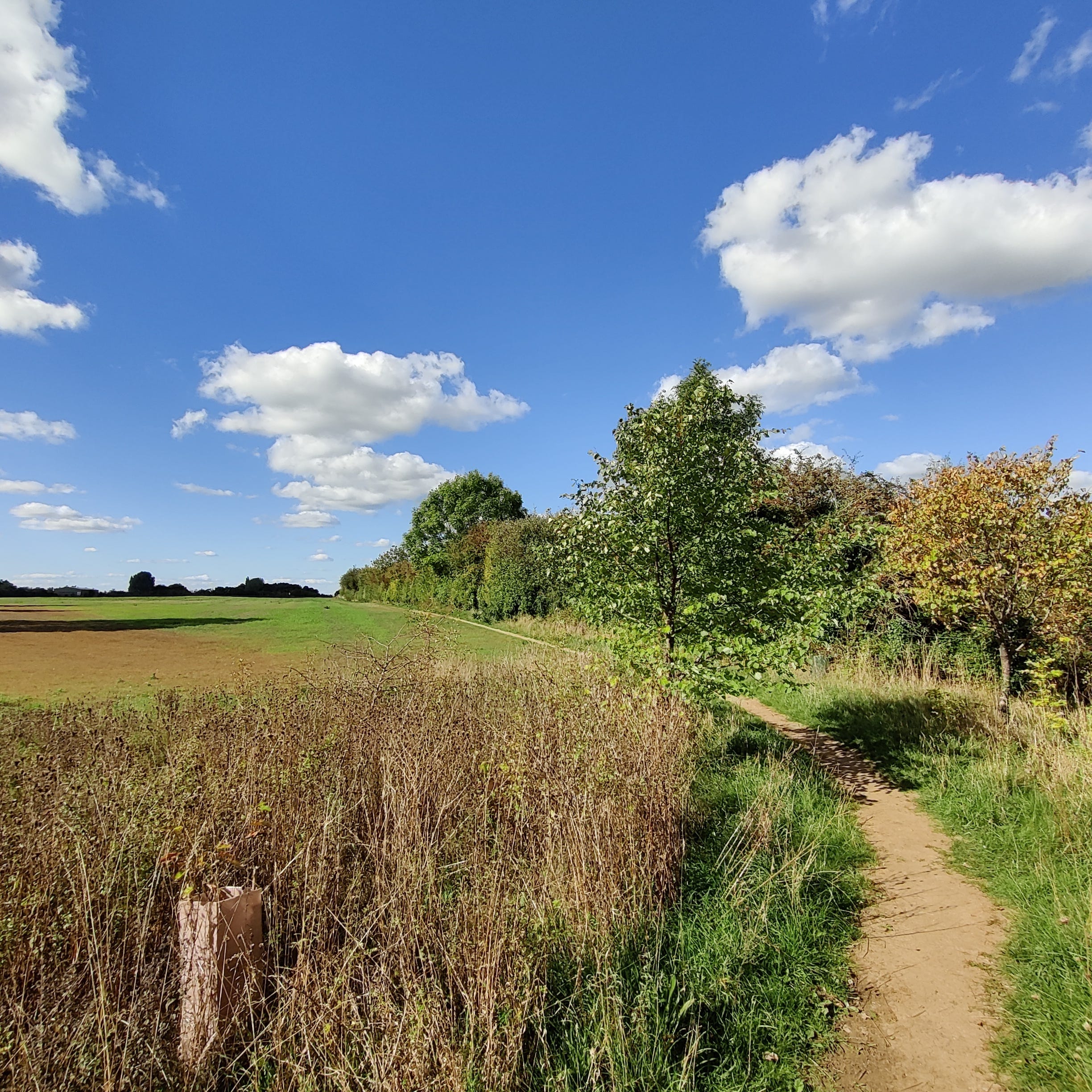
It’s only a field. A reasonably nondescript field, brown earth at the moment with an uneven covering of weedy greenness, like the early growth on a teenager’s chin, a crop of bumfluff. Every summer, though, the field is golden with wheat or barley. Roughly a triangle, bordered on two sides by the roads into the village, large enough so that the traffic noise does not intrude on the peace and stillness. A footpath follows the third edge, running parallel to the railway line, which dips in and out of view behind the hedgerow, disembodied trains trundling past mostly unseen, flashes of movement behind hawthorn and bramble. A farm machinery contractor occupies the furthest corner, enormous tractors and pieces of agricultural equipment serenaded, if the wind is blowing in the wrong direction, by the sound of Radio 1 blasting from their mechanics and operators’ radio. Looking south, the long line of the Chiltern Ridge adds an alluring depth to the often-hazy horizon.
When I first moved here, this was non-access land but, perhaps giving in to the entitlement of dog walkers, the landowner established a permissive path a dozen or so years ago to link the two roads, as well as opening up similar ways across neighbouring fields, creating short routes ideal for treading on soil rather than tarmac but without needing to clock up the miles on the green dotted rights of way.
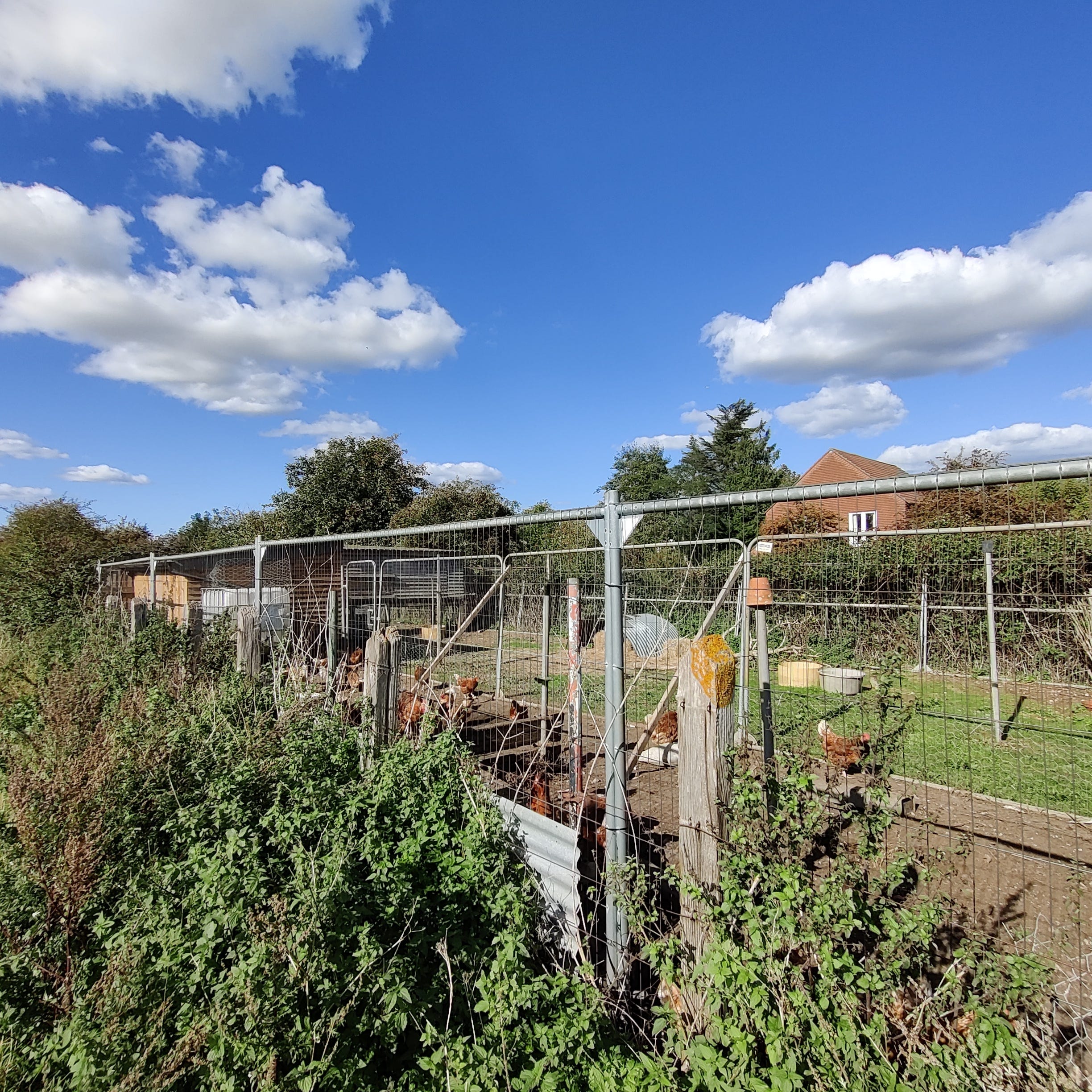
This accessibility was a godsend during the Covid lockdowns. I used to walk it, very early on a Saturday morning, having stocked up on food supplies in the village shop and getting outdoors ahead of anyone else. Just me and the occasional old man, hobbling out for his breakfast newspaper, but no one else shared this field with me. As that spring progressed, trains went from being visible through branches and twigs to hidden by white and pink blossom. At the top end, a chicken run buzzed with fowl activity, brown and white goats and pigs also resident behind a high wire fence. The odd rat would cross my path, seizing the initiative of the available feed; very odd, in some cases, as I’m convinced some matched the colourings of the domesticated animals whose pens they were visiting. The bushes are a particularly reliable source of blackberries and, in a late dash to get the last of the crop this year, my field did my proud.
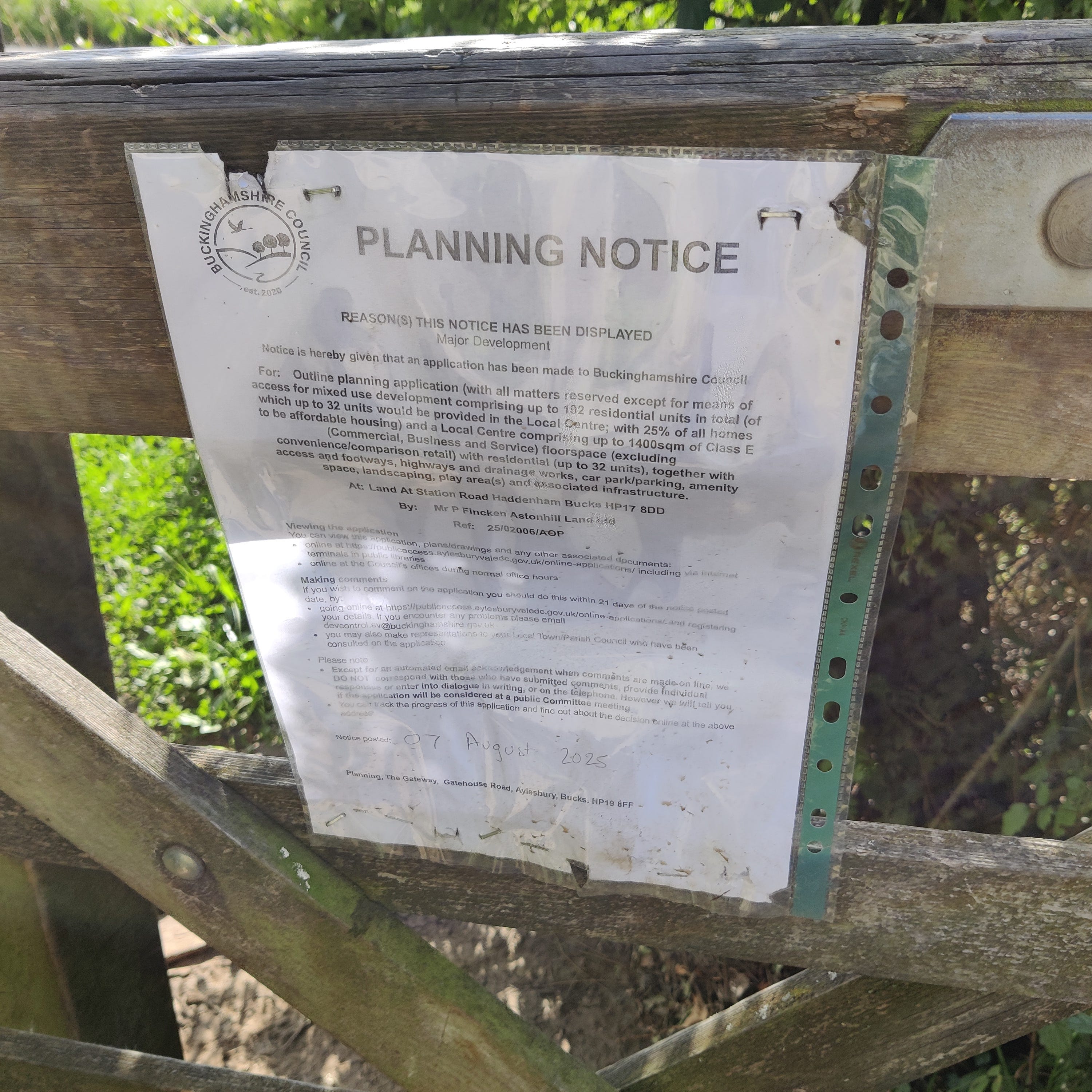
Like so many fields in England, a planning notice has appeared. An application has been lodged to create up to 192 ‘units’ here. In some ways, next to the railway station, it is a logical site for development. In others, it marks a symbolic crossing of the village’s natural western boundary formed by the railway line; quite literally the wrong side of the tracks. Huge amounts of housing are being built northwards, with a main road acting as the obvious end point for those developments (for the time being, no doubt). Apparently, a quarter of the 192 proposed units will be affordable housing, no doubt leaving the remainder to be very unaffordable housing, large executive homes with insufficient parking for several SUVs and gardens the size of my sofa. Ground-breaking (literally) ecological designs and materials are promised as the earth is concreted over.
I have to be careful here. I am sure that, thirty years ago when my own home was being built, residents were concerned about such new housing changing the shape of the village, along what had been a field-lined road out, turning a small, old settlement into semi-urban Metroland. Realistically, nostalgia for a rural arcadia which, if it ever existed, cannot return is probably rose-tinted. The population is rising, people have to live somewhere, rail and bus links are good here and amenities generally flourishing, despite the best efforts of opportunistic property investors to buy up and shut down pubs which themselves can provide luxury ‘character’ homes.
This piece has been brewing for a few weeks, ever since the first notices went up. However, as I type, the government are announcing proposals to knock up at least three, and maybe twelve, new towns, with 1.5 million homes being built by the end of the decade. Assuming much of this follows the house-building pattern of largely constructing 1-2 person flats (or am I supposed to call them apartments, to make them sound more des res) or the aforementioned identikit palaces, I can only guess that this must be creating homes for potentially 4-5 million people. Despite Mr Farage’s scaremongering, I don’t see 5 million people boating into the country and, with fertility rates falling across most of the UK, is there really demand for such scale of housebuilding, especially concentrated mostly in the South East of England? Manchester and Leeds get a mention in the government’s plans, and the fields around Macclesfield look likely to have planning notices nailed to their gates soon, but a so-called Northern Powerhouse idea of spreading economic opportunity more evenly seems to have wilted. Anecdotally I admit, I hear of a flourishing market in new builds as second homes and do wonder if, in years to come, we will be looking at ghost developments like those left in Ireland after the Celtic tiger bubble burst.
Environmentally, what is the impact of mass-scale housebuilding going to be? ‘My’ field is good arable farmland, producing a small but surely vital amount of grain. Food. As climate change makes food production more challenging for farmers, with extremes of dryness colliding against sodden flooding, should we be paving over more and more of our earth? In a positive sign, my local MP, not someone I usually expect to be at the forefront of ecological campaigning, has objected to levelling this field, highlighting the pressures on local infrastructure, including sewage and water supplies, the importance of this as agricultural land, as well as the precedent this development would set for further building leaking westwards.
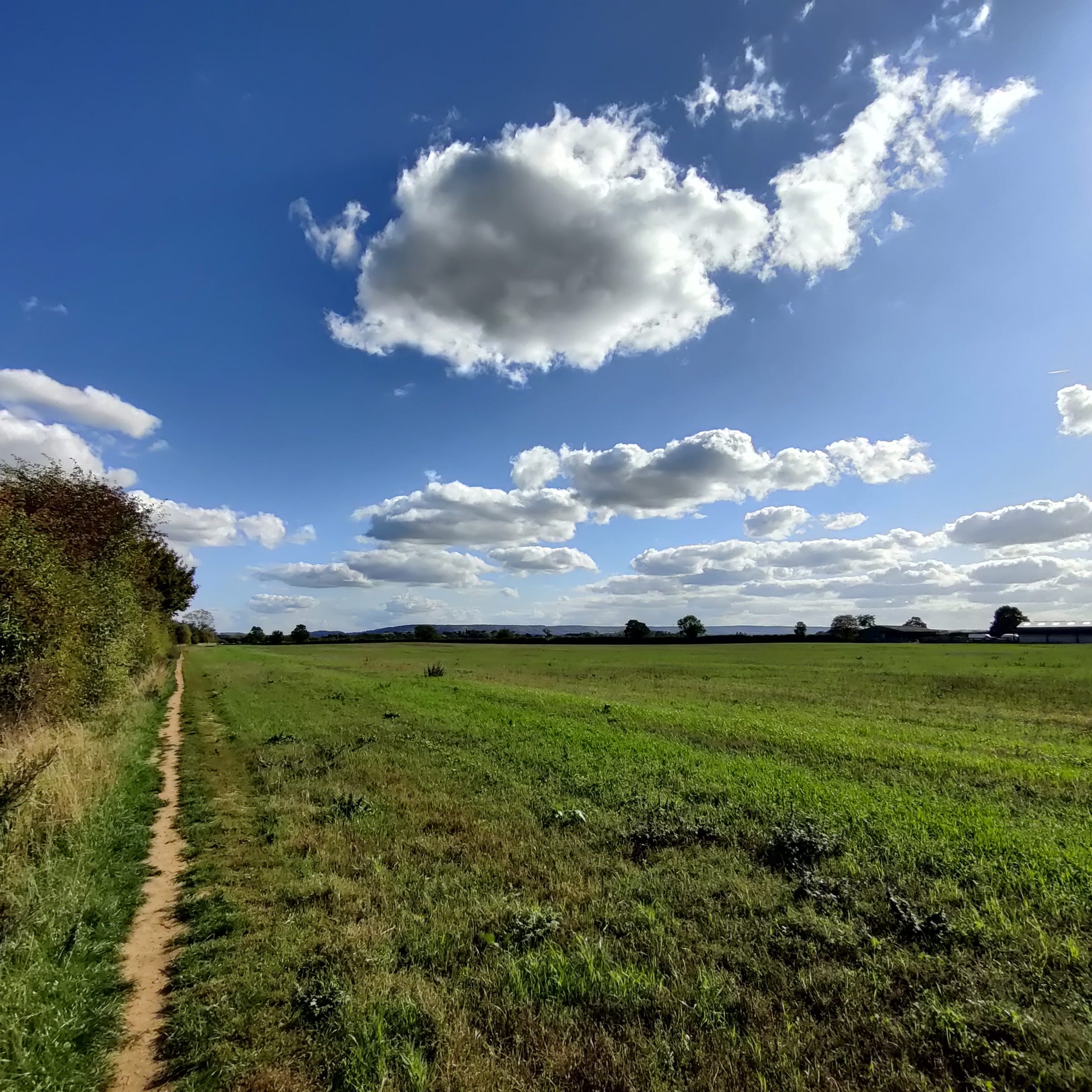
I write this piece fully aware that I have become a nimby, protective of a rural spot I value and enjoy. But, for me, this is the story of so many back yards, not just mine. Back yards which are economically productive (as everything clearly boils down to economic value and perceived progress), helping to regulate and support ecosystems and, in many cases, offering valuable green spaces for people already cooped up among bricks and mortar, but also goldmines for those with money to make in property. Just an example, then, of a field in England.
The Guild of Master Procrastinators is a free publication. If you enjoyed A field in England, or any of my other writing, I’m always very grateful for your donations to my caffeine habit.
I'm sorry to hear this Andy. The fields in our old town, where I used to walk my dog in peace and quiet, and had so many nature encounters - are slowly being encroached upon by housing estates too. I feel sad every time I go back there.
Makes me think of the C19 designer/writer William Morris - his visionary novel 'News from Nowhere', and how he dreamed of a utopian future when towns and cities would be engulfed/reclaimed by nature. 🌿✨️